
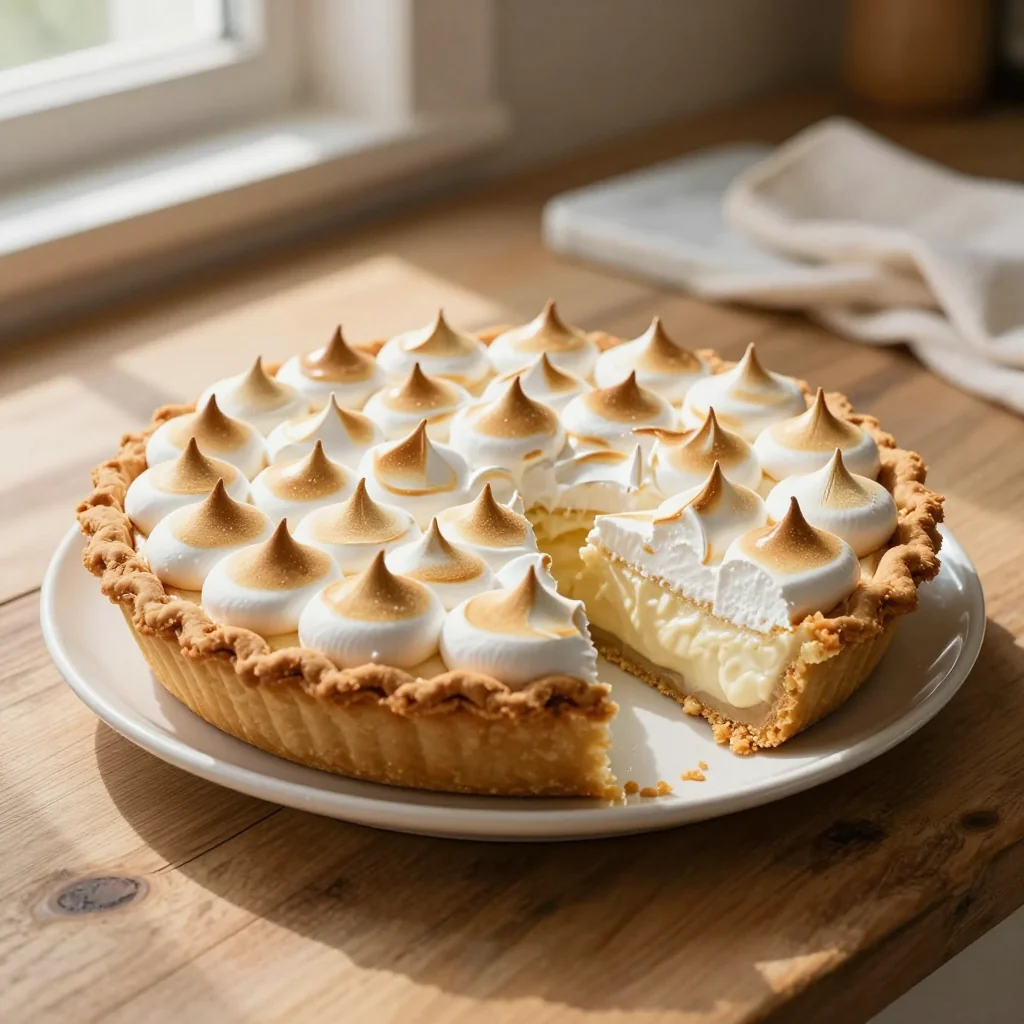
A tropical, velvety coconut custard crowned with a glossy, sweet meringue – the ultimate indulgent dessert.
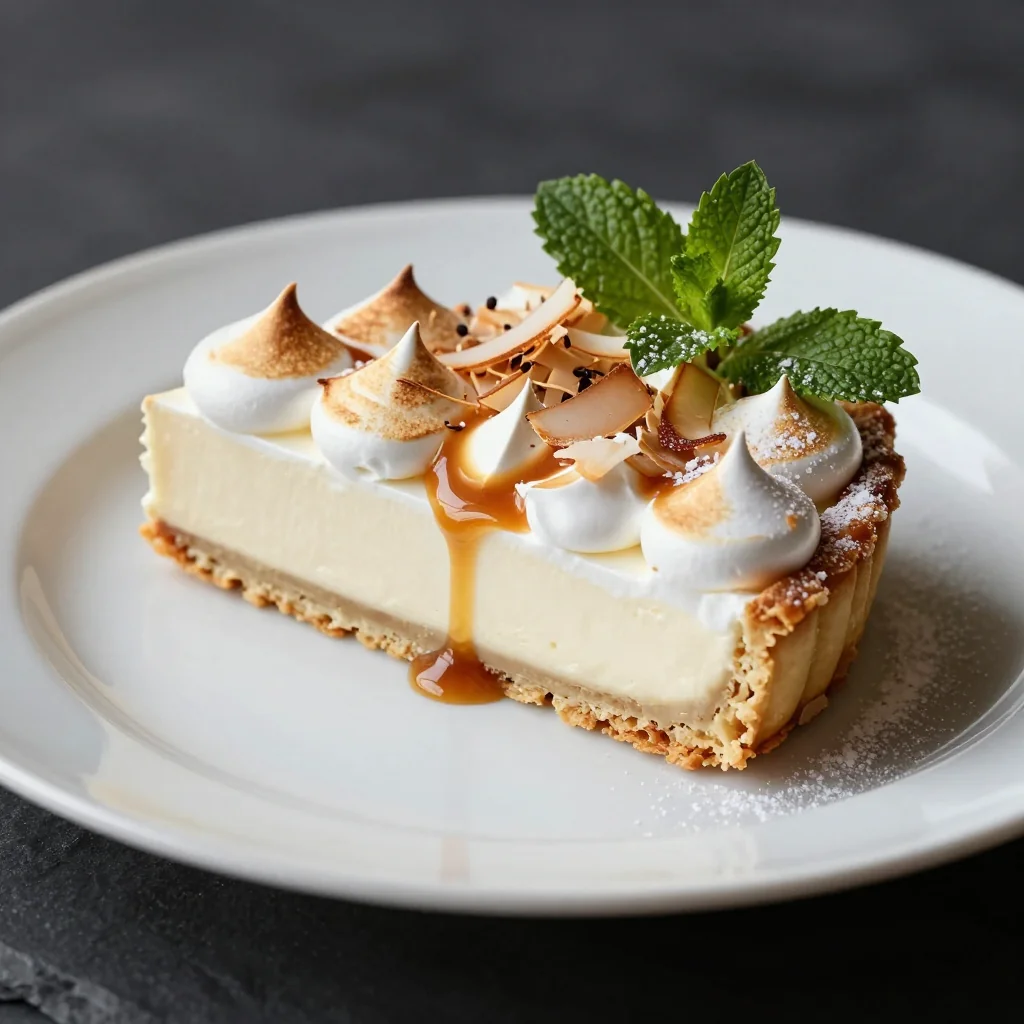
When I first tasted a slice of coconut cream pie on a breezy beachside café in Bali, the silky coconut custard and the airy, caramelized meringue instantly transported me to a sun‑kissed paradise. I remember the gentle crunch of the buttery crust giving way to a cool, fragrant filling that lingered on my palate long after the last bite. That moment sparked a lifelong fascination with tropical desserts, and I’ve been perfecting this recipe ever since.
This pie has its roots in classic French pastry, yet it embraces the bright flavors of the Pacific. The combination of coconut milk, toasted coconut flakes, and a light, glossy meringue creates a harmony that feels both familiar and exotic. Whether you’re celebrating a special occasion or simply craving a slice of sunshine, this coconut cream pie fits the bill.
In this article you’ll learn how to craft a flawless crust, achieve a custard that’s both thick and silky without curdling, and whip a meringue that holds its shape perfectly while turning a beautiful golden brown under the broiler. I’ll also share pro‑level tips, variations for dietary needs, and storage secrets so you can enjoy leftovers without losing any of the magic.
Let’s dive in and bring a taste of the tropics to your kitchen!
🌟 Why This Recipe Will Captivate You
From the first forkful, this Coconut Cream Pie delivers a symphony of textures and flavors that keep you coming back for more.
- ✨ Perfect Balance of Sweet and Nutty: The toasted coconut adds a subtle nuttiness that perfectly offsets the sweet, velvety custard, creating a layered taste experience.
- ✨ Foolproof Meringue: Our step‑by‑step method guarantees a glossy, stable meringue that browns evenly without weeping.
- ✨ Versatile Presentation: Serve it in a classic pie dish for formal gatherings or in individual ramekins for a modern twist.
- ✨ All‑Year Comfort: Though it evokes tropical vibes, the comforting custard makes it ideal for any season.
- ✨ No Specialized Equipment Needed: All tools are common kitchen staples – a mixing bowl, a whisk, and a broiler.
- ✨ Impressive Yet Simple: The final result looks bakery‑level, yet the technique is approachable for home cooks of medium skill.
🥗 Ingredients
📝 Complete Ingredient List
For the Crust:
For the Coconut Custard Filling:
For the Meringue Topping:
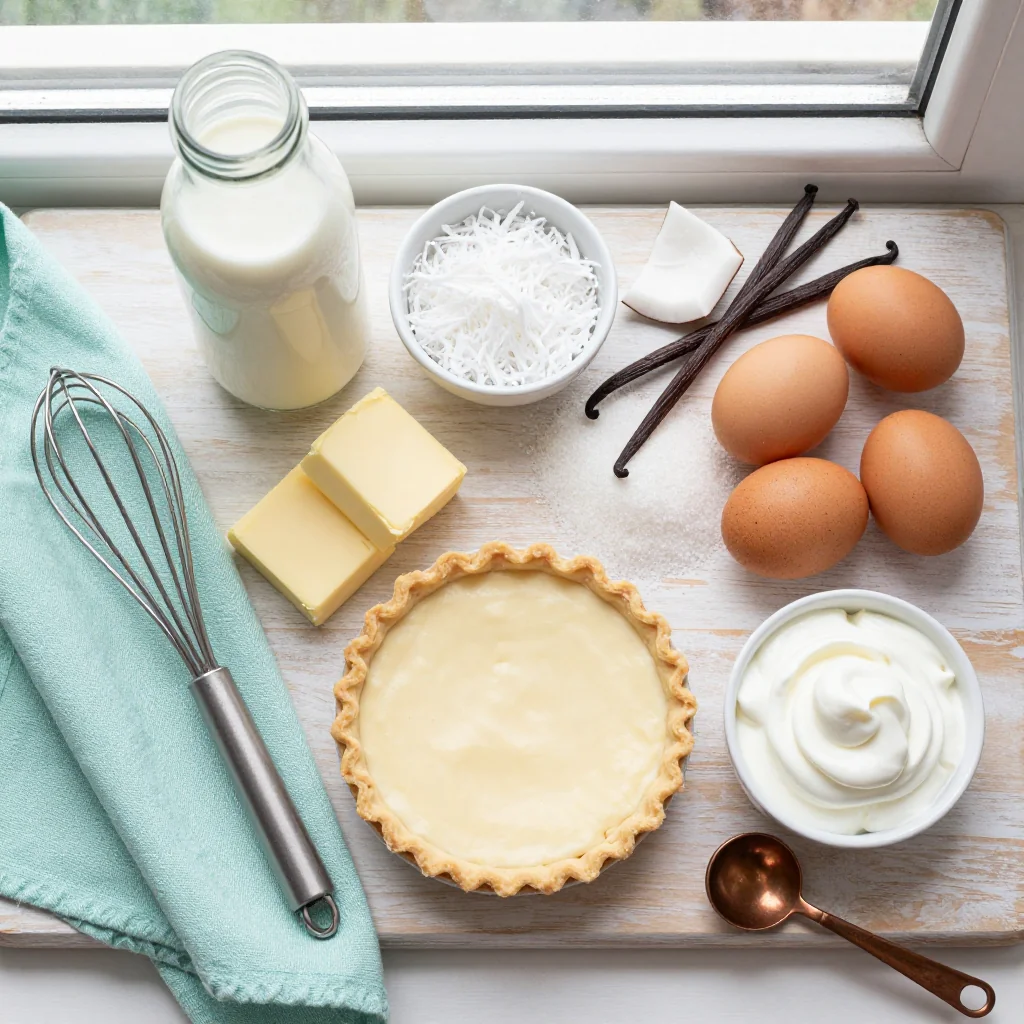
🔍 Focus on Key Ingredients
Coconut Milk
Coconut milk provides the creamy, tropical base of the custard. Opt for a brand that lists “full fat” as the first ingredient; the higher fat content ensures a lush mouthfeel and prevents the custard from becoming watery. If you prefer a slightly lighter version, you can substitute half of the coconut milk with whole milk, but the signature coconut aroma will be a bit milder.
Egg Yolks
Egg yolks act as natural emulsifiers, giving the custard its silkiness while also contributing a subtle golden hue. Use fresh, room‑temperature yolks to avoid curdling when they meet the hot milk mixture. Whisk them lightly before adding to the saucepan to incorporate a thin ribbon of air, which helps the custard set more evenly.
Shredded Coconut (Toasted)
Toasting the shredded coconut releases its natural oils, adding a nutty depth that contrasts beautifully with the sweet custard. Spread the coconut on a dry skillet over medium heat, stirring constantly for 3‑4 minutes until golden and fragrant. This step is essential; untosted coconut can taste bland and may introduce unwanted moisture.
🔄 Quick Substitutions
| If you don’t have... | Use instead... |
|---|---|
| Graham cracker crumbs | Digestive biscuit crumbs |
| Full‑fat coconut milk | Unsweetened coconut cream (thin with water) |
| Egg whites | Aquafaba (3 Tbsp per egg white) |
👨🍳 Step‑by‑Step Instructions
Follow these detailed steps to create a flawless coconut cream pie from crust to crown.
📋 Phase 1: Preparation & Mise en Place
Gather all ingredients, pre‑heat the oven, and prepare your baking tools.
Preheat the oven and prepare the crust pan
Set the oven to 175°C (350°F). Lightly grease a 23 cm (9‑inch) pie dish with butter or non‑stick spray. This ensures the crust releases easily after baking.
Combine crust ingredients
In a medium bowl, mix the graham cracker crumbs, melted butter, and granulated sugar until the mixture resembles wet sand. Press the mixture firmly into the bottom and up the sides of the prepared pie dish, creating an even layer.
🔥 Phase 2: Baking the Crust & Making the Custard
Bake the crust, then whisk together the custard while keeping the mixture smooth.
Bake the crust
Place the crust in the preheated oven for 10‑12 minutes, or until it turns a light golden brown. Remove and let cool while you prepare the custard.
Whisk dry ingredients for the custard
In a separate bowl, combine cornstarch, 150 g sugar, and salt. Whisk until there are no lumps. This dry blend will prevent clumping when added to the hot liquids.
Heat coconut milk and cream
In a saucepan over medium heat, combine coconut milk and heavy cream. Warm the mixture until it just begins to steam—do not let it boil. This gentle heating protects the coconut flavor from scorching.
Temper the egg yolks
In a small bowl, beat the egg yolks with 50 g of the sugar until pale. Slowly drizzle about ½ cup of the hot coconut‑cream mixture into the yolks while whisking constantly. This gradual temperature increase prevents the yolks from scrambling.
Combine everything and thicken
Return the tempered yolks to the saucepan, add the dry cornstarch mixture, and continue whisking over medium‑low heat. Cook for 4‑5 minutes, or until the custard thickens and coats the back of a spoon. Remove from heat, stir in vanilla extract and toasted shredded coconut.
✨ Phase 3: Meringue, Assembly & Finishing
Whip the meringue, assemble the pie, and achieve a golden finish.
Whip the meringue
In a clean, dry mixing bowl, beat the egg whites with cream of tartar on medium speed until soft peaks form. Gradually add the remaining 50 g of sugar, one tablespoon at a time, increasing to high speed until stiff, glossy peaks appear. Finish with a splash of lemon juice for stability.
Assemble the pie
Pour the warm coconut custard into the baked crust, spreading it evenly. Immediately top the custard with the meringue, using a spatula to create swirls or peaks that will brown beautifully.
Broil for a perfect finish
Place the assembled pie under a preheated broiler for 2‑3 minutes, watching closely, until the meringue turns a deep golden‑brown. If your broiler is uneven, rotate the pie halfway through.
Cool and serve
Allow the pie to cool at room temperature for 30 minutes, then refrigerate for at least 2 hours to set the custard. Slice with a sharp knife dipped in hot water for clean cuts.
💡 Expert Tips & Tricks
🛒 Choosing the Right Ingredients
When selecting coconut milk, read the label carefully. Brands that separate the cream from the water often list “coconut cream” as the first ingredient, which yields a richer custard. For the graham crackers, opt for a low‑sugar variety if you prefer a less sweet crust. Fresh eggs are essential for a stable meringue; older eggs tend to separate more easily, resulting in a softer peak.
🔪 Preparation Techniques
Before you start, measure all dry ingredients into a small bowl. This “mise en place” habit prevents accidental over‑mixing and ensures you add each component at the right moment. When toasting coconut, keep the heat medium‑low and stir constantly to avoid burning. The toasted flavor is subtle but adds depth that plain shredded coconut lacks.
🌡️ Mastering the Cooking Process
Maintain a gentle simmer when heating the coconut milk and cream; a rapid boil can cause the milk to separate, resulting in a grainy custard. Use a whisk, not a spoon, when thickening the custard to disperse the cornstarch evenly. For the meringue, ensure the bowl is completely free of grease; even a tiny amount of oil can inhibit the formation of stiff peaks.
🍽️ Presentation & Service
Before serving, garnish each slice with a light sprinkle of toasted coconut and a thin slice of fresh pineapple for a pop of color. If you’re serving the pie at a dinner party, place the whole pie on a marble board and cut it at the table for a dramatic reveal.
🏆 Pro Secrets
Understanding the science behind each step transforms an amateur effort into a professional masterpiece.
- 🎯 Temperature Control for Custard: The custard thickens when the starch granules absorb liquid and swell. Keeping the heat just below boiling (around 85‑90°C) ensures the starch gelatinizes without breaking down, preserving a silky texture.
- 🎯 Stabilizing Meringue with Acid: Adding a teaspoon of lemon juice or cream of tartar lowers the pH, strengthening the protein network in egg whites. This yields a firmer, glossy meringue that resists weeping.
- 🎯 Preventing Crust Sogginess: Pre‑bake the crust and allow it to cool completely before adding the hot custard. The cooled crust forms a barrier that prevents moisture from seeping into the biscuit base.
- 🎯 Achieving Even Browning: Use a kitchen torch if your broiler is uneven. A quick pass over the meringue creates a caramelized surface without overcooking the custard underneath.
- 🎯 Portion Scaling Accuracy: The built‑in portion adjuster recalculates ingredient amounts on the fly, ensuring consistent results whether you serve 4 or 12 guests.
- 🎯 Flavor Layering with Toasted Coconut: Toast the coconut separately, then fold it into the custard at the very end. This preserves the crunch and prevents the coconut from becoming soggy during baking.
“A perfect meringue is the crown jewel of any dessert; treat it with respect and it will reward you with a cloud‑like texture that never collapses.” — Chef Pierre Gagnaire
🔄 Variations & Adaptations
This coconut cream pie is a flexible canvas. Below are several ways to tailor it to dietary preferences, flavor cravings, and family-friendly needs.
🥬 Vegetarian / Vegan Version
Swap the dairy components with plant‑based alternatives: use coconut cream (undiluted) instead of heavy cream, replace egg yolks with ¼ cup of silken tofu blended smooth, and create a vegan meringue using ½ cup aquafaba (the liquid from a can of chickpeas) whipped with cream of tartar and sugar. The result is a fully vegan pie that retains the luscious texture.
- Replace heavy cream with an equal amount of coconut cream.
- Replace egg yolks with ¼ cup silken tofu blended with 1 Tbsp nutritional yeast for richness.
- Use aquafaba (3 Tbsp per egg white) for the meringue.
🌶️ Flavor Variations
Experiment with complementary flavors to keep the recipe fresh and exciting.
Spicy Lime Version:
Add zest of one lime to the custard and a pinch of ground cayenne pepper to the meringue. The citrus brightens the coconut while the heat adds an unexpected kick.
Mediterranean Herb Version:
Incorporate a teaspoon of finely chopped fresh mint into the custard and garnish with toasted pistachios instead of coconut. The herbaceous note pairs beautifully with the creamy base.
Asian Matcha Version:
Stir 1 Tbsp of high‑grade matcha powder into the custard for a subtle earthy flavor and a striking green hue. Finish with a dusting of matcha on the meringue.
⚠️ Dietary Adaptations
Gluten‑Free:
Use gluten‑free graham cracker crumbs or a blend of almond flour and coconut flour for the crust. Ensure all other ingredients are certified gluten‑free.
Lactose‑Free:
Swap heavy cream with lactose‑free whipping cream or an equal part of coconut cream. The coconut milk already provides a dairy‑free base.
Low‑Calorie:
Reduce the sugar in the custard by 30 % and replace half of the shredded coconut with finely chopped toasted almonds for added protein and crunch without extra calories.
👶 Kid‑Friendly Version
Kids love the sweet meringue and the soft texture. Omit the toasted coconut to avoid any choking hazards, and serve the pie in small, bite‑size tartlet pans. You can also add a drizzle of chocolate ganache on top for an extra treat.
📦 Storage & Reheating
🧊 Conservation
In the Refrigerator:
- Duration: Up to 4 days
- Recommended container: Airtight glass pie dish
- Tip: Cover the meringue loosely with parchment to prevent it from absorbing fridge odors.
In the Freezer:
- Duration: Up to 2 months
- Method: Freeze the pie without the meringue; store the meringue separately in a freezer‑safe bag.
- Defrosting: Transfer to the refrigerator overnight, then re‑apply fresh meringue and broil.
💡 For best texture, consume the pie within the first two days; the meringue can become soft if stored too long.
♨️ Reheating
🔥 In the Oven (Recommended):
- Preheat to 160°C (325°F).
- Cover the pie loosely with aluminum foil to protect the meringue.
- Heat for 10‑12 minutes, then remove foil and warm an additional 3‑4 minutes to restore a slight crisp.
⚡ In the Microwave (Quick):
- Place a microwave‑safe cover over the slice.
- Heat on medium power for 30‑45 seconds.
- Check and repeat in 15‑second bursts if needed.
🍳 In a Skillet:
If you only have a slice, warm it in a non‑stick skillet over low heat, cover, and let steam for 2‑3 minutes. This method revives the custard without drying it out.
🍷 Perfect Pairings
🥗 Side Dishes
- Fresh Tropical Fruit Salad: A mix of mango, pineapple, and passion fruit adds acidity that cuts through the richness.
- Light Citrus Sorbet: A scoop of lime or lemon sorbet refreshes the palate between bites.
- Simple Green Salad: Baby arugula with a citrus vinaigrette offers a peppery contrast.
🍷 Wine & Beverage Matches
- Late Harvest Riesling: Its honeyed notes echo the pie’s sweetness while its acidity balances the custard.
- Prosecco: Bubbles cleanse the palate and enhance the lightness of the meringue.
- Non‑Alcoholic: A chilled coconut water spritzer with a splash of pineapple juice.
🍰 Complementary Courses
Begin with a light cucumber‑mint gazpacho, follow the pie with a small serving of dark chocolate truffle, and finish the meal with a cup of freshly brewed jasmine tea to accentuate the tropical flavors.
❓ Frequently Asked Questions
Q: Can I use a different type of crust?
Absolutely. A classic shortbread crust, a chocolate cookie base, or even a nut‑and‑date crust works wonderfully. Just adjust the butter proportion to keep the crust cohesive, and pre‑bake for the same amount of time.
Q: How do I know when the custard is thick enough?
The custard is ready when it coats the back of a spoon and leaves a clear line when you run your finger through it. It should also feel smooth and glossy, not grainy. If you’re unsure, test a small spoonful on a chilled plate; it should hold its shape.
Q: My meringue is weeping – what went wrong?
Weeping usually occurs when the meringue is under‑beaten, contains fat, or is exposed to humidity. Ensure all bowls and whisk attachments are spotless, beat the whites to stiff peaks, and add a stabilizer like cream of tartar or lemon juice. After broiling, let the pie cool uncovered for a few minutes before refrigerating.
Q: Can I make this pie ahead of time?
Yes. Prepare the crust and custard a day in advance, store them separately, and assemble the meringue just before serving. This prevents the meringue from softening and keeps the texture perfect.
Q: How can I make the pie gluten‑free?
Swap the graham cracker crumbs for gluten‑free digestive biscuits or a blend of almond flour and coconut flour. Ensure the cornstarch is certified gluten‑free. The rest of the recipe is naturally gluten‑free.
Q: Is it possible to freeze the meringue?
Freezing meringue is not recommended because it loses its airy texture upon thawing. Instead, store the meringue separately in a freezer‑safe container, then re‑whip it briefly before applying and broiling.
🎉 Let’s Get Baking!
This Coconut Cream Pie with Meringue Topping is a celebration of texture, flavor, and visual appeal. The buttery, crumbly crust supports a luxuriously smooth coconut custard, while the glossy meringue adds a light, caramelized crown that makes every bite unforgettable. Whether you’re serving it at a holiday dinner, a summer garden party, or a cozy winter evening, the pie brings a touch of tropical elegance to any table.
Remember, the key to success lies in temperature control, proper whisking, and a little patience while the custard sets. Use the pro tips and variations to make this recipe truly your own, and don’t hesitate to experiment with flavors that excite you.
Have you tried this recipe?
Leave a comment and a rating below! Share your photos on Instagram with #CoconutCreamPieMagic to be featured on our blog.
Coconut Cream Pie with Meringue Topping
A silky coconut custard topped with a golden, fluffy meringue – pure tropical indulgence.
📝 Ingredients
Crust
Coconut Custard Filling
Meringue Topping
👨🍳 Instructions
- 1 Preheat oven to 175°C (350°F) and grease a 23 cm pie dish.
- 2 Mix crust ingredients, press into dish, and bake 10‑12 min.
- 3 Whisk dry custard ingredients (cornstarch, sugar, salt).
- 4 Heat coconut milk and cream until steaming; do not boil.
- 5 Temper egg yolks with hot milk, then combine all custard components and thicken over low heat.
- 6 Stir in vanilla and toasted coconut; set aside.
- 7 Whip egg whites with cream of tartar, gradually add sugar, finish with lemon juice.
- 8 Fill crust with custard, spread meringue over top, creating peaks.
- 9 Broil 2‑3 min until meringue is golden brown.
- 10 Cool 30 min, refrigerate 2 h, slice and serve.
🥗 Nutritional Information (per serving)
*Nutritional values are estimates and may vary based on ingredient brands.