I was standing in my kitchen, staring at a pot of simmering beef tips that had turned into a sad, rubbery mess. The sauce had thickened into a clumpy, chalky paste that clung to the bottom of the pot like stubborn scabs. My friends had called me a “slow‑cooker connoisseur” only to find out that my version was more “slow‑cooker disaster” than “slow‑cooker masterpiece.” I swear I could hear the sigh of disappointment echoing off the walls, and I knew I had to do something different. The moment I realized I could turn that flop into a flavor explosion, I was hooked.
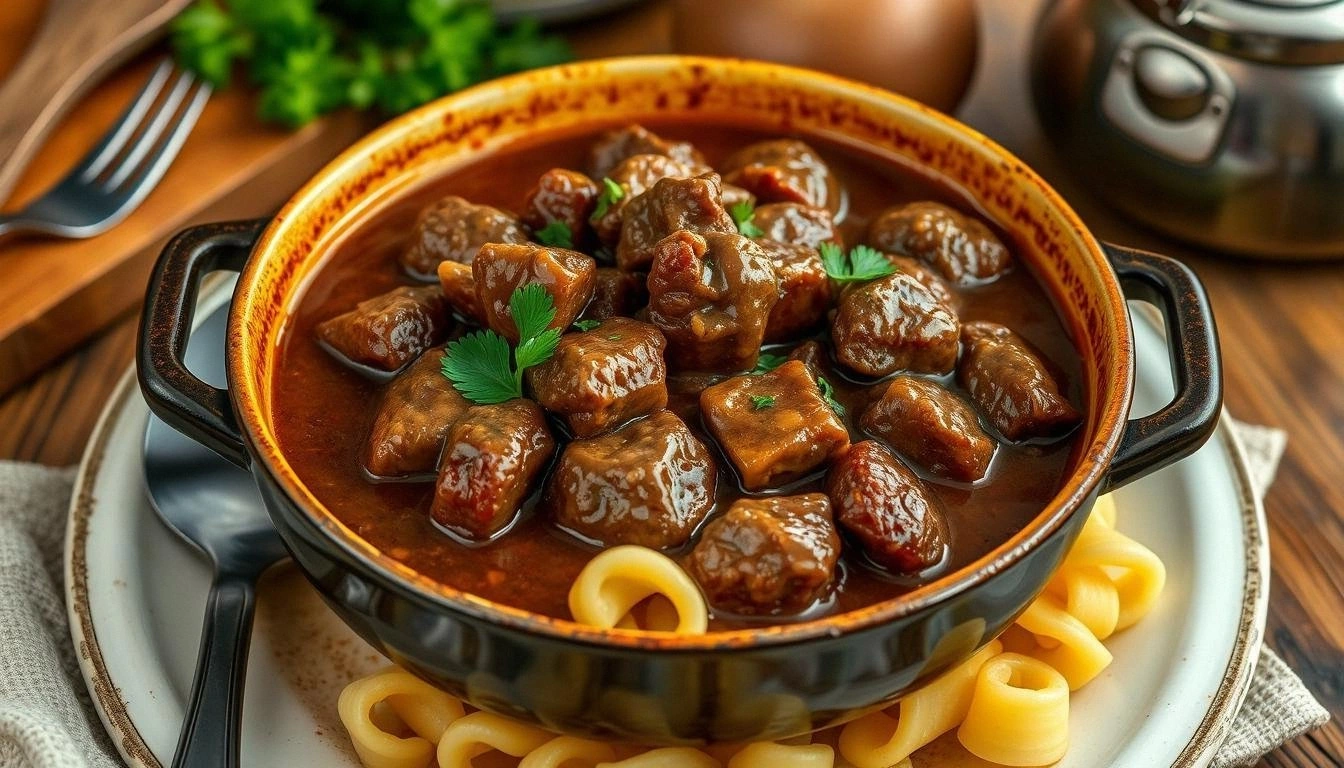
First, the aroma hit me like a warm blanket—rich beef, caramelized onions, and a hint of thyme that made my nostrils dance. The sound of the pot bubbling was a comforting lullaby, a steady rhythm that promised something delicious. When I lifted a ladle, the sauce gleamed, its glossy sheen reflecting the kitchen lights like polished amber. The texture was a silky, almost velvety coat that clung to every strand of noodle. And when I took that first bite, the explosion of umami hit my palate, followed by a subtle sweetness that lingered like a secret.
This version is a game‑changer because it balances the boldness of classic beef stew with the comforting familiarity of noodles. Unlike the usual slow‑cooker recipes that leave the meat limp, my method locks in the succulence with a quick sear that caramelizes the surface. The sauce is thickened not by flour but by a gentle reduction that preserves the natural juices, giving it a silky finish. The noodles are cooked al dente in the broth, absorbing the flavors without becoming mushy. Together, they create a dish that feels like a hug on a plate.
Now, here’s the kicker: I swapped out the typical flour slurry for a whisper of tomato paste and a splash of Worcestershire, creating a depth of flavor that’s almost cinematic. I also added a dash of red pepper flakes for a subtle heat that wakes up the senses. And the secret sauce? A touch of butter at the end, which gives the dish that luxurious sheen and a silky mouthfeel. Trust me, I dare you to taste this and not go back for seconds.
Let me walk you through every single step—by the end, you'll wonder how you ever made it any other way. I’ll keep you by my side, pointing out the little tricks that make the difference. Think of this as a cooking lesson, but with a lot more flavor and a lot less frustration. So grab your skillet, your crockpot, and let’s get started.
What Makes This Version Stand Out
- Flavor: The sauce is a complex tapestry of umami, sweetness, and a hint of heat that lingers on the tongue. Every ingredient plays a role, from the deep savor of Worcestershire to the subtle brightness of soy sauce. This harmony turns an ordinary meal into a memorable experience.
- Texture: The beef stays tender and juicy, while the noodles remain al dente and resilient. The silky sauce clings to each strand, creating a mouthfeel that feels both comforting and indulgent. The contrast between the soft meat and the firm noodles is a satisfying dance.
- Convenience: The method takes less than an hour from start to finish, with the crockpot doing the heavy lifting. A quick sear, a few minutes of sautéing, and the rest is hands‑off. You can set it up before work and return to a ready‑to‑eat dinner.
- Versatility: It works as a main dish, a hearty lunch, or a comforting dinner. The flavors adapt to different occasions, whether you’re feeding a family or hosting a gathering. The dish can be tweaked for dietary preferences with minimal effort.
- Make‑ahead: You can prepare the broth and sear the beef ahead of time and let the crockpot do the rest. The flavors deepen as the dish rests, making it even more delicious the next day. This makes it perfect for meal prep or a busy week.
- Crowd‑pleaser: Friends and family rave about the rich sauce and the satisfying bite. The dish is warm, hearty, and comforting—qualities that resonate with all ages. It’s the kind of meal that turns any gathering into a celebration.
Inside the Ingredient List
The Flavor Base
Onion, garlic, carrots, and celery form the aromatic foundation that lifts the dish from simple to unforgettable. They release natural sugars during sautéing, creating a caramelized sweetness that balances the savory broth. Skipping any of these would leave the sauce flat and uninteresting. For a fresher note, use a mix of red and white onions.
The Texture Crew
Beef tips are the star; choose chuck or sirloin for the best tenderness. The noodles provide body and a comforting chew, absorbing the broth while staying firm. A small amount of flour creates a subtle thickness without making the sauce heavy, while butter adds a glossy sheen that makes the dish feel indulgent. If you’re avoiding dairy, replace butter with a splash of olive oil for a lighter finish.
The Unexpected Star
Red pepper flakes add a whisper of heat that keeps the dish lively. Thyme offers earthy undertones, while the bay leaf imparts subtle herbal depth. Together, they create a flavor profile that feels both classic and adventurous. If you’re heat‑averse, reduce the flakes or omit them entirely.
The Final Flourish
Salt and pepper finish the seasoning, allowing each component to shine. A splash of butter at the end adds silkiness and a buttery sheen that makes the sauce irresistible. If you prefer a lower sodium version, use low‑sodium broth and adjust the salt accordingly. Remember, taste as you go; the balance is key.
Everything's prepped? Good. Let's get into the real action...
The Method — Step by Step
- Season and Sear: Pat the beef tips dry and season them generously with salt, pepper, and a light dusting of flour. Let them rest for about ten minutes so the seasoning can penetrate. Heat a splash of olive oil in a cast‑iron skillet over medium‑high heat until shimmering. Add the beef in batches, searing until each side is a deep, caramelized brown—about four to five minutes per side. The sear locks in juices and builds a flavor base that will carry through the slow‑cooking process.
- Sauté the Veggies: In the same skillet, reduce the heat to medium and add a tablespoon of butter. Toss in the diced onion, minced garlic, sliced carrots, and celery. Cook, stirring occasionally, until the vegetables soften and the onions turn translucent—roughly five minutes. The butter adds richness, while the vegetables release sweetness that will mellow into the broth. When the mixture starts to caramelize, you’ll hear that comforting sizzle that signals progress.
- Build the Flavor Base: Stir in the tomato paste and Worcestershire sauce, letting them caramelize for a minute. The paste deepens the color and adds a subtle sweetness; the Worcestershire brings depth and a hint of tang. Next, pour in soy sauce, beef broth, a teaspoon of dried thyme, and a bay leaf. Bring the mixture to a gentle simmer, letting the flavors meld into a fragrant broth that will bathe the beef.
- Transfer to the Crockpot: Carefully ladle the entire skillet contents into the crockpot, being cautious of splattering hot liquid. Add the seared beef tips on top, ensuring they’re submerged in the broth. Set the crockpot to low for four to five hours, or high for two to three hours, depending on your schedule. The slow, steady heat will break down the beef fibers, turning them into melt‑in‑your‑mouth tenderness while the broth thickens naturally.
- Watch Out: While the beef cooks, keep an eye on the liquid level. If it’s too low, add a splash of water or extra broth to keep everything submerged. This prevents the bottom from scorching and ensures even cooking. A quick stir now and then also helps distribute heat and flavor uniformly.
- Add the Noodles: About thirty minutes before serving, sprinkle the egg noodles directly into the crockpot. Stir gently to coat them in the sauce and let them absorb the broth. Because the noodles cook quickly, this timing ensures they finish al dente and remain firm. If you prefer a softer texture, add them a few minutes later.
- Final Touches: Remove the bay leaf and discard it. Taste the sauce and adjust seasoning with salt and pepper as needed. For that glossy finish, swirl in a tablespoon of butter, letting it melt into the broth. The butter will give the sauce a silky sheen that glistens on the noodles.
- Serve and Enjoy: Ladle the hearty mixture into bowls, making sure each serving gets plenty of beef and noodles. Garnish with fresh parsley or a sprinkle of grated Parmesan if you’re feeling indulgent. Serve hot, and watch as the steam rises, carrying the aroma of slow‑cooked beef and savory broth into every corner of the kitchen.
That's it — you did it. But hold on, I've got a few more tricks that'll take this to another level...
Insider Tricks for Flawless Results
The Temperature Rule Nobody Follows
Many cooks assume low is always better, but a brief high‑heat sear before slow‑cooking makes a world of difference. The Maillard reaction creates a caramelized crust that locks in juices and adds depth. If you skip this step, the beef can end up dry and flavorless. I’ve seen friends who skip it and get a dish that tastes like a pot of broth.
Why Your Nose Knows Best
Smell is a powerful indicator of doneness. When the broth is ready, it should emit a rich, savory aroma that makes your mouth water. If it’s too watery, give it a few more minutes on low. If it’s too thick, add a splash of water or broth to thin it out. Trust your nose; it’s the best judge of flavor.
The 5‑Minute Rest That Changes Everything
After the crockpot finishes, let the dish rest for five minutes before serving. This allows the juices to redistribute, preventing a watery first bite. The rest period also lets the noodles settle, giving the sauce time to thicken slightly. It’s a small pause that makes a big difference in texture.
Keep the Noodles Al Dente
Adding noodles too early can result in soggy strands. Add them in the final half‑hour to preserve their bite. If you prefer a softer texture, let them sit for an additional minute or two. This simple timing tweak keeps the dish from becoming mushy.
Finishing with Butter
A tablespoon of butter at the end adds silkiness and a glossy sheen that makes the dish feel indulgent. It also helps the sauce coat the noodles evenly. If you’re avoiding dairy, replace it with a drizzle of high‑smoke‑point oil. Either way, the finishing touch elevates the dish from good to unforgettable.
Creative Twists and Variations
This recipe is a playground. Here are some of my favorite ways to switch things up:
Spicy Cajun Twist
Add a tablespoon of Cajun seasoning to the sautéed vegetables and a pinch of cayenne pepper to the broth. The result is a bold, smoky flavor that pairs beautifully with the beef. Serve with a side of cornbread for a Southern feel.
Asian Fusion
Swap the beef broth for chicken broth and add a splash of rice vinegar and a teaspoon of sesame oil. Use soba noodles instead of egg noodles for an authentic touch. The sauce takes on a slightly sweet and nutty profile that’s irresistible.
Vegetarian Version
Replace the beef with hearty mushrooms or seared tofu. Keep the broth and seasoning the same for a meaty flavor. This version is filling and still delivers the comforting sauce and noodle combination.
Herb‑Infused Delight
Add a handful of fresh rosemary and parsley to the slow‑cooker. The herbs infuse the broth with bright, aromatic notes that elevate the dish. Finish with a squeeze of lemon for a fresh finish.
Pasta Power
Use spaghetti or fettuccine instead of egg noodles for a different mouthfeel. The long strands soak up the sauce, creating a hearty, comforting plate. This variation is great for a quick weeknight dinner.
Cheesy Finale
Sprinkle grated cheddar or mozzarella on top before serving. The cheese melts into the sauce, adding a creamy layer that’s simply irresistible. This is a crowd‑pleaser at parties and family dinners alike.
Storing and Bringing It Back to Life
Fridge Storage
Store the leftovers in an airtight container for up to three days in the refrigerator. The beef stays tender, and the sauce retains its silky texture. When you’re ready to eat, reheat gently on the stove or in the microwave, stirring occasionally.
Freezer Friendly
Freeze the dish in portioned containers for up to two months. The noodles may soften slightly upon thawing, but the beef remains juicy. Thaw overnight in the refrigerator, then reheat on low heat while stirring to re‑integrate the sauce.
Best Reheating Method
Reheat in a saucepan over medium heat, adding a splash of water or broth to loosen the sauce. Stir frequently until the mixture is hot and the noodles are tender. This method preserves the sauce’s silky texture and prevents the noodles from drying out.