
Picture this: it’s the night before Thanksgiving, the kitchen is a symphony of clattering pans and the scent of roasting turkey wafting through the house. I’m standing in front of a pot of broth, flipping through a thousand stuffing recipes that all look the same, until a friend drops a dare on me: “Make the stuffing that will make everyone beg for seconds.” That’s when the fire ignited. I grabbed my trusty skillet, pulled out the oldest loaf of bread from the pantry, and decided to rewrite the rules. The result? A stuffing so silky, buttery, and utterly unforgettable that I swear I could taste the gratitude in every bite.
The first time I tasted it, I was hit by a cascade of flavors. The bread was toasted to a golden brown, giving it a subtle crunch that turned into a tender, almost velvety interior as it absorbed the savory broth. The onions and celery danced with garlic and mushrooms, each bite releasing a burst of umami that made my mouth water. The sage and thyme infused a herbal depth that was neither overpowering nor faint; it was just right. The apple added a sweet, crisp contrast, while the dried cranberries and pecans brought a playful texture and a hint of nutty sweetness. It was a symphony of textures and tastes that felt like a warm hug from the inside out.
What sets this version apart from every other stuffing recipe you’ll find online? It’s the combination of classic ingredients with a few bold twists that elevate the dish from good to legendary. I dared to introduce a touch of orange zest for brightness, a splash of wine for depth, and a splash of apple cider for a subtle sweetness that keeps the stuffing from feeling heavy. The result is a stuffing that is moist, flavorful, and has that coveted golden crust on top that crackles like fresh snow under your knife. I dare you to taste this and not go back for seconds. Trust me, once you’ve had one bite, the rest will follow.
I’ll be honest—when I first made it, I ate half the batch before anyone else even got to try it. The kitchen smelled like a holiday feast, and the aroma alone made people come running. But that’s the power of a great stuffing: it’s not just a side dish; it’s the centerpiece that brings everyone together around the table. If you’ve ever struggled with stuffing that turns out dry or too soggy, you’re not alone—and I’ve got the fix. Picture yourself pulling this out of the oven, the whole kitchen smelling incredible, and everyone leaning in, eager to taste the masterpiece. Let me walk you through every single step—by the end, you’ll wonder how you ever made it any other way.
What Makes This Version Stand Out
- Flavor: The blend of fresh herbs, garlic, and a splash of apple cider creates a depth that’s both comforting and adventurous.
- Texture: The combination of toasted bread cubes and sautéed mushrooms gives it a satisfying crunch that turns into a silky interior.
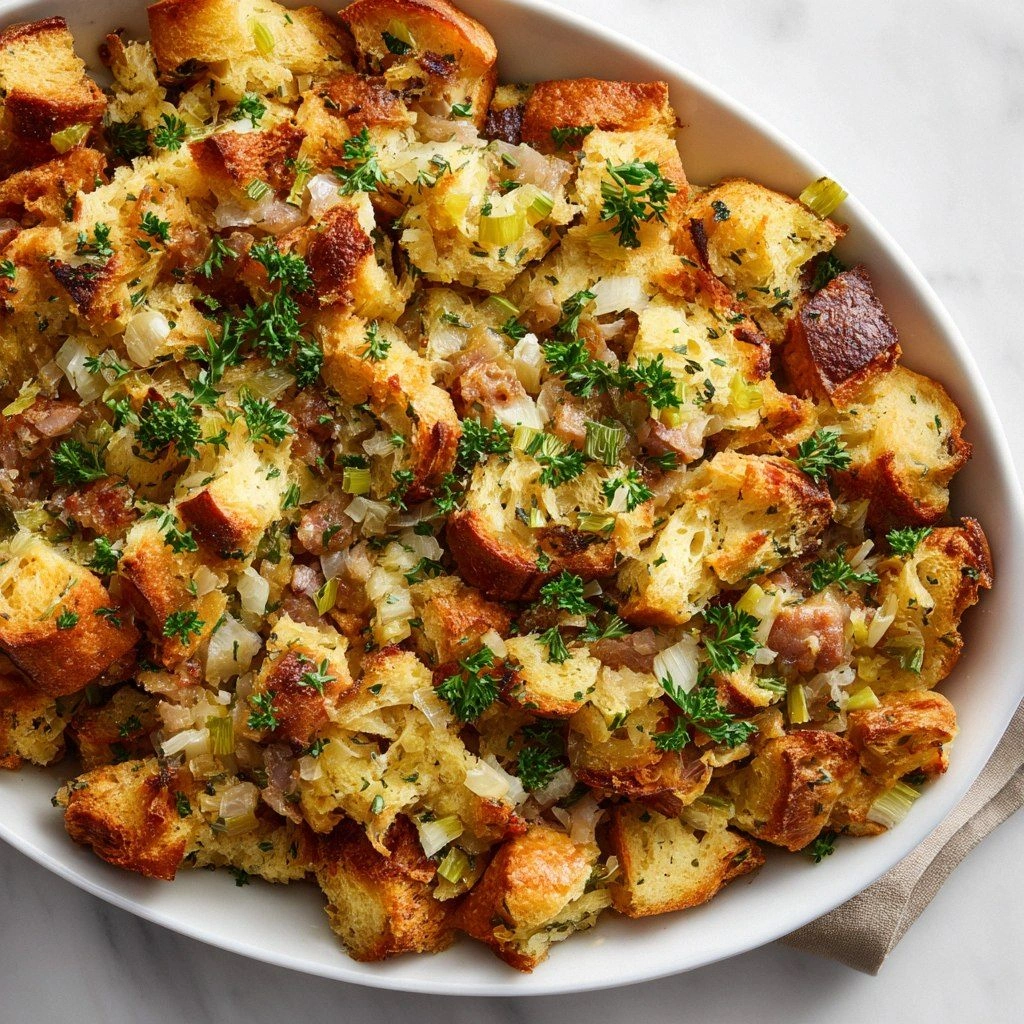
- Visual Appeal: The golden, slightly crisp crust on top is a feast for the eyes, promising a mouthwatering bite.
- Versatility: This stuffing works beautifully with turkey, chicken, or even as a hearty side for vegetarian roasts.
- Crowd Reaction: Guests often ask for the recipe after the meal—because it’s that good.
- Ingredient Quality: Using day‑old bread, fresh herbs, and real butter elevates the dish beyond the average.
- Make‑Ahead Friendly: The stuffing can be prepared a day in advance and reheated without losing flavor.
- Balanced Fat: The butter provides richness, but the addition of a splash of cider keeps it from feeling greasy.
Inside the Ingredient List
The Flavor Base
The foundation of any great stuffing is the flavor base. Here, day‑old bread cubes soak up a savory broth infused with garlic, onions, and celery. The broth itself is a low‑sodium chicken stock that keeps the dish from becoming too salty while adding a subtle depth that’s hard to replicate with water alone. If you skip the stock, you’ll end up with a dry, bland mess that feels like a missed opportunity. Swap the chicken stock for a turkey stock if you’re making it with a turkey; the result will feel more cohesive with the main dish. When selecting your bread, look for a loaf that has a slightly crusty exterior and a soft interior—this texture will hold up best during the cooking process.
The Texture Crew
Texture is everything. Sautéed mushrooms bring a meaty bite, while diced apples add a juicy counterpoint that keeps the stuffing from becoming too dense. Dried cranberries offer a burst of sweetness that cuts through the savory elements, and pecans bring a satisfying crunch that mimics the classic “bread and butter” crunch people love. If you’re looking for a gluten‑free version, swap the bread for a gluten‑free loaf or use a mixture of gluten‑free breadcrumbs and toasted nuts. The key is to balance moistness with crunch; otherwise, the stuffing will either become soggy or too dry.
The Unexpected Star
Orange zest is the secret weapon in this recipe. It’s a subtle yet powerful burst of citrus that lifts the entire dish, giving it a bright, almost floral note that’s unexpected in a traditionally savory side. The zest also pairs beautifully with the apple, creating a harmonious sweet‑savory balance that’s hard to resist. If you’re not a fan of citrus, you can replace the zest with lemon zest for a slightly different profile, or simply omit it for a more traditional flavor. The zest’s aroma will linger in the kitchen, making guests feel like they’re stepping into a cozy holiday cabin.
The Final Flourish
The final flourish is where the stuffing truly shines. Fresh herbs—sage, thyme, and rosemary—are added just before baking to preserve their bright flavors. A splash of apple cider adds a hint of sweetness that balances the savory elements, and a drizzle of melted butter on top creates a glossy, golden crust that’s impossible to resist. If you prefer a richer dish, add an extra tablespoon of butter; if you want something lighter, reduce the butter by half and increase the broth slightly. The final flourish is the icing on the cake, the finishing touch that turns a good stuffing into a masterpiece.
Everything’s prepped? Good. Let’s get into the real action.
The Method — Step by Step
- Prep the Bread: Toss the cubed bread into a large bowl. Drizzle with melted butter and toss again until every cube is lightly coated. This step ensures the bread will toast evenly and develop a golden, buttery crust. The smell of butter sizzling on the bread is already a promise of the deliciousness to come.
- Sauté Aromatics: In a large skillet, melt 2 tablespoons of butter over medium heat. Add the diced onions and celery, sautéing until translucent and fragrant—about 5 minutes. Stir in the minced garlic and sliced mushrooms, cooking until the mushrooms release their moisture and begin to brown. This creates a savory base that will infuse the bread with flavor.
- Combine Bread and Aromatics: Add the toasted bread cubes to the skillet, stirring to coat each cube with the buttery, aromatic mixture. Sprinkle in the diced apple, dried cranberries, and chopped pecans. Toss again, ensuring everything is evenly distributed. The apple will soften slightly, adding moisture, while the cranberries will pop with sweet bursts.
- Season and Add Liquids: Season the mixture with 1/2 teaspoon salt, 1/4 teaspoon black pepper, 1 teaspoon fresh sage, 1 teaspoon fresh thyme, and 1 teaspoon fresh rosemary. Pour in 2 cups of low‑sodium chicken stock and 1/4 cup of apple cider. Stir until the bread cubes are fully coated and the mixture looks moist but not soggy. The stock will help the bread absorb flavors without becoming a mush.
- Fold in Eggs: In a small bowl, whisk the 2 eggs. Pour the whisked eggs over the bread mixture, stirring gently until the eggs are fully incorporated. The eggs bind the stuffing together and give it a rich, silky texture. The mixture should now look like a thick, moist batter.
- Transfer to Baking Dish: Grease a 9x13-inch baking dish with butter or non‑stick spray. Spoon the stuffing mixture into the dish, spreading it out evenly. The even spread ensures uniform cooking and a crisp top.
- Bake: Preheat the oven to 350°F (175°C). Cover the dish with foil and bake for 25 minutes. Then remove the foil, sprinkle a few extra tablespoons of butter on top, and bake for another 15 minutes until the top is golden brown and slightly crisp. The foil keeps the stuffing moist, while the final uncovered bake creates that coveted crunch.
- Rest and Serve: Let the stuffing rest for 5 minutes before serving. This brief pause allows the flavors to settle and the edges to firm up, making each bite easier to enjoy. The aroma will linger in the kitchen, tempting everyone to dig in.
That’s it—you did it. But hold on, I’ve got a few more tricks that’ll take this to another level.
Insider Tricks for Flawless Results
The Temperature Rule Nobody Follows
Many people bake stuffing at 375°F, but that can dry it out. Baking at 350°F gives the stuffing enough time to absorb all the flavors without overcooking. I’ve found that a lower temperature also gives the crust a better golden color. If you’re using a convection oven, reduce the temperature by 25°F to avoid over‑browning.
Why Your Nose Knows Best
Smell is your best gauge of doneness. When the stuffing is done, it should emit a warm, toasty aroma that makes you want to dig in. If you’re unsure, insert a small fork into the center; if it comes out clean, you’re good. A quick sniff can save you from a soggy or burnt mess.
The 5-Minute Rest That Changes Everything
Letting the stuffing rest for five minutes after baking allows the steam to redistribute, ensuring each bite is moist and flavorful. I’ve seen people skip this step, only to have the stuffing feel dry or uneven. The rest also makes it easier to scoop out portions without them falling apart.
Add a Splash of Water Before Reheating
When reheating leftovers, add a splash of water or broth to the stuffing. This tiny trick restores moisture and keeps the stuffing from drying out. I’ve used this method for leftovers, and the result is as good as the first time around. It’s a simple step that makes a huge difference.
Use Day-Old Bread for Best Results
Day-old bread is the secret to a perfect stuffing texture. Fresh bread tends to become too soft when it absorbs liquid, while old bread holds its structure better. If you don’t have day-old bread, toast the cubes lightly in the oven before mixing. This step mimics the moisture retention of aged bread.
Finish with a Butter Drizzle
Right before the final bake, drizzle a few extra tablespoons of melted butter over the top. This not only adds flavor but also creates a glossy, golden crust that’s impossible to resist. A little butter goes a long way in elevating the overall taste.
Creative Twists and Variations
This recipe is a playground. Here are some of my favorite ways to switch things up:
Mediterranean Twist
Replace the apple and cranberries with diced tomatoes and kalamata olives. Add a pinch of oregano and finish with a drizzle of olive oil. The result is a savory, herbaceous stuffing that pairs beautifully with roasted chicken.
Pumpkin Spice Edition
Add 1/2 cup of pumpkin puree and a teaspoon of pumpkin pie spice. Swap the pecans for toasted pumpkin seeds. The sweet, earthy flavor makes this stuffing a perfect match for Thanksgiving turkey.
Cheesy Delight
Fold in 1 cup of shredded cheddar cheese and 1/2 cup of mozzarella before baking. The cheese melts into a gooey, flavorful coating that adds a new dimension to the dish. Serve it alongside a hearty pot roast for a comforting meal.
Vegan Version
Use vegetable broth instead of chicken stock, and replace the butter with a plant‑based butter or olive oil. Add tofu cubes for protein, and keep the rest of the ingredients the same. This version is just as delicious and satisfies all dietary needs.
Sausage Stuffing
Sauté sliced sausage before adding the bread cubes. The sausage’s smoky flavor infuses the entire dish, creating a rich, savory stuffing that’s a crowd‑pleaser. Pair it with a simple green salad for a balanced meal.
Herb Garden
Increase the amount of fresh herbs—sage, thyme, rosemary—to a generous 2 teaspoons each. Add a handful of chopped fresh parsley for a bright, green pop. This variation is especially refreshing and pairs well with roasted turkey.
Storing and Bringing It Back to Life
Fridge Storage
Store leftovers in an airtight container in the refrigerator for up to 3 days. Reheat in the oven at 350°F for 10–15 minutes, or until warmed through. The stuffing retains its texture when reheated this way, keeping the crumby bits intact.
Freezer Friendly
Divide the stuffing into individual portions and wrap tightly in freezer paper or plastic wrap. Freeze for up to 3 months. Thaw overnight in the refrigerator before reheating as described above. The flavor remains unchanged, and the texture stays firm.
Best Reheating Method
Add a splash of water or broth before reheating to restore moisture. Cover the dish with foil to trap steam, then bake at 350°F for 10–15 minutes. The result is a steaming, flavorful stuffing that tastes just like fresh.