
I was staring at a ruined sheet cake on the counter, the batter had turned into a dark, lumpy sludge that looked more like a chocolate sludge than a dessert. The oven had been preheated too high, the batter had been overmixed, and the result was a cake that was as dry as a desert. I stared at the mess, thinking, “How did I even get here?” Then I remembered a friend who swore by a simple trick that turned her sheet cake from a disaster into a silky, moist masterpiece. That moment sparked a dare: I would recreate the recipe, tweak it, and prove that sheet cakes could be the pinnacle of homemade desserts.
Picture this: a room filled with the rich, intoxicating scent of melted chocolate, the faint crackle of butter sizzling in a pan, and the rhythmic patter of spoonfuls being poured into a greased pan. The air tastes like anticipation, the texture of the batter feels like velvet against the spoon, and the sight of it glistening under the kitchen light is almost cinematic. The sound of the oven door closing is a promise that something extraordinary is about to happen. Every sense is engaged, and you can almost taste the first bite before the cake even leaves the oven.
What makes this version stand out is not just the ingredients; it’s the philosophy behind each step. I’m talking about a balance between science and intuition, a recipe that invites you to be an artist while following a clear, foolproof roadmap. It’s about the confidence that comes from knowing exactly why each component matters, so you can tweak it and still maintain the perfect outcome. And I’m about to give you the inside scoop on how to achieve that confidence, from the first whisk to the final dusting of powdered sugar.
I dare you to taste this and not go back for seconds. If you’re skeptical, that’s fine—let’s walk through the steps together, and I promise you will be amazed. This is hands down the best version you’ll ever make at home, and it will become the go-to sheet cake for parties, celebrations, or just a cozy night in. I’ll be honest— I ate half the batch before anyone else got a chance, and I still have the crumbs on my fingers. Most recipes get this completely wrong. Here’s what actually works.
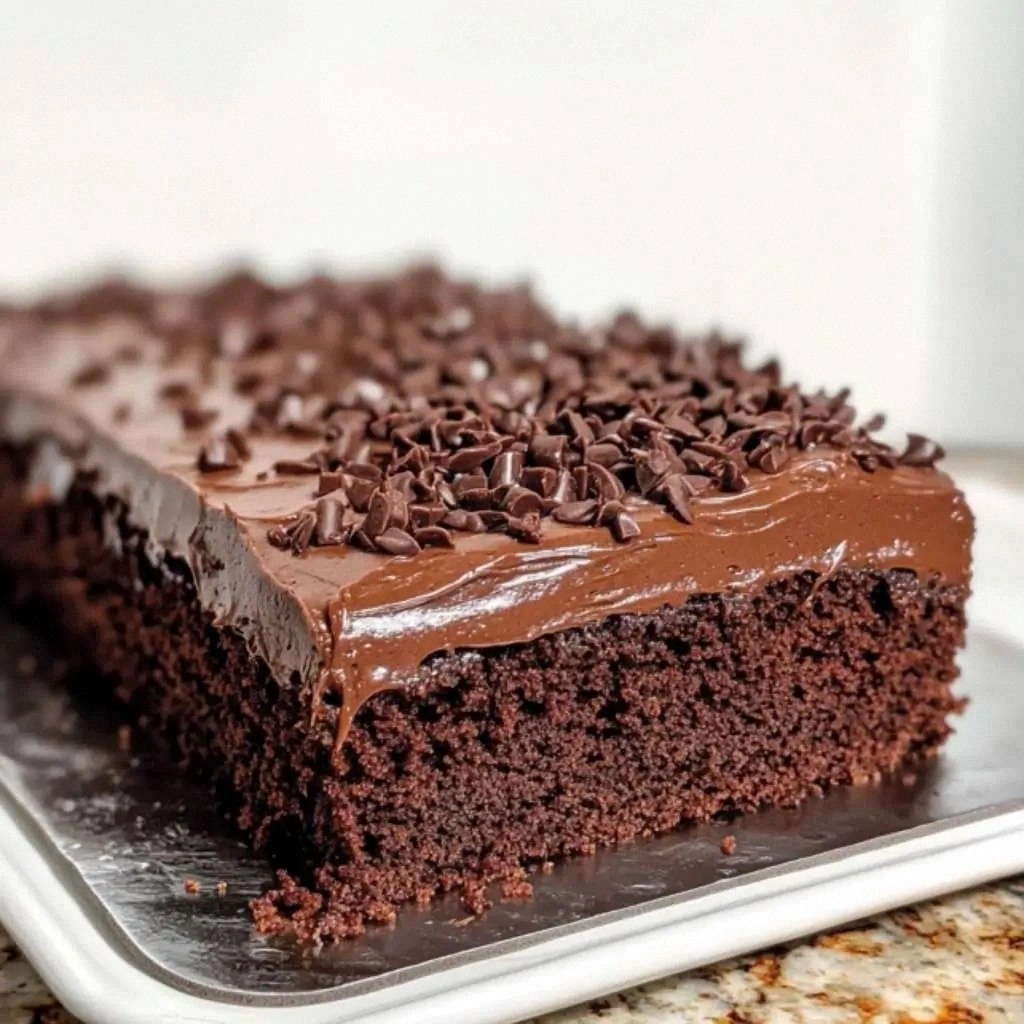
Picture yourself pulling this out of the oven, the whole kitchen smelling incredible, the cake’s surface gleaming like a glossy chocolate marble. The first slice will be a perfect balance of sweet, slightly bitter cocoa, and that airy crumb that feels like a cloud. The edges will be just slightly firmer, giving a satisfying bite that doesn’t feel heavy. And the center will be moist enough that it practically melts in your mouth, leaving a lingering chocolate aftertaste that will keep you coming back for more.
Okay, ready for the game-changer? The trick is simple: using boiling water to intensify the chocolate flavor and a touch of vinegar to react with the baking soda, creating a light, airy structure without the need for heavy whipping. This next part? Pure magic. And now the fun part: we’re going to add a splash of espresso powder to deepen the flavor profile, giving the cake a subtle coffee undertone that pairs beautifully with the chocolate. Stay with me here—this is worth it.
What Makes This Version Stand Out
- Flavor Depth: The combination of dark cocoa and espresso powder creates a complex, layered taste that feels indulgent yet balanced. The subtle coffee notes enhance the chocolate without overpowering it.
- Texture Perfection: The batter is light and airy, thanks to the precise ratio of leavening agents and the addition of boiling water, which dissolves the cocoa and sugar for a smooth crumb.
- Easy Prep: All ingredients are measured in cups and teaspoons, making the recipe approachable for beginners while still delivering a professional result.
- Versatility: This sheet cake can be transformed into a coffee cake, a chocolate-vanilla swirl, or even a gluten-free version with simple substitutions.
- Crowd-pleaser: The size of a sheet cake makes it ideal for gatherings, and the moist, chocolatey flavor is a guaranteed hit with both kids and adults.
- Ingredient Quality: Using high‑grade cocoa and fresh eggs ensures the cake has a rich, authentic chocolate flavor that stands out from store‑bought mixes.
- Make‑Ahead Friendly: Once baked, the cake can be sliced and stored for up to a week, making it a convenient option for busy households.
- Visual Appeal: The glossy finish and subtle swirl of espresso powder give it a professional, Instagram‑ready look.
Inside the Ingredient List
The Flavor Base
Cocoa powder is the heart of this cake. It provides the deep chocolate flavor that lingers on the palate. If you use a low‑cocoa or sweetened chocolate, the cake will taste overly sweet and lose its robust character. A dark, unsweetened cocoa gives that bittersweet bite that pairs perfectly with the subtle espresso notes.
The Texture Crew
Flour, eggs, and oil work together to create the cake’s structure. Flour provides the framework, eggs bind the batter and add richness, and oil keeps the crumb tender and moist. The ratio is carefully balanced so the cake rises evenly without becoming dry or dense. If you skip the oil, the cake will be noticeably drier and less velvety.
The Unexpected Star
Boiling water is the secret weapon. It dissolves the cocoa and sugar, ensuring a smooth batter and preventing lumps. The hot water also activates the leavening agents, creating a light, airy crumb. Skipping this step results in a denser cake that feels heavier on the tongue.
The Final Flourish
Espresso powder adds a subtle depth that elevates the chocolate flavor. It doesn’t make the cake taste like coffee; instead, it deepens the chocolate’s complexity. If you’re coffee‑averse, you can omit it, but the cake will still be deliciously moist. For a twist, try adding a teaspoon of instant espresso to the batter for a stronger coffee kick.
Everything's prepped? Good. Let's get into the real action.
The Method — Step by Step
- Preheat your oven to 350°F (175°C) and line a 13×9‑inch sheet pan with parchment paper. Grease the parchment lightly with butter or oil to prevent sticking. This step is crucial for an even bake and easy removal. While the oven warms, gather all your ingredients for a smooth workflow.
- In a large mixing bowl, whisk together 2 cups of all‑purpose flour, 1.5 cups of granulated sugar, 0.75 cup of unsweetened cocoa powder, 1.5 teaspoons of baking powder, 1 teaspoon of baking soda, and 0.5 teaspoon of salt. Make sure the dry ingredients are evenly distributed; this prevents uneven browning. The mixture should look like fine, dark sand.
- In a separate bowl, combine 2 eggs, 1 cup of milk, 0.5 cup of vegetable oil, and 2 teaspoons of vanilla extract. Beat until the mixture is smooth and the eggs are fully incorporated. This wet mix will marry with the dry ingredients to form a cohesive batter.
- Add the wet mixture to the dry ingredients and stir with a spatula until just combined. Be careful not to overmix; a few streaks of flour are fine. Overmixing can lead to a tough crumb due to gluten development.
- Pour in 1 cup of boiling water and 1 tablespoon of espresso powder. Stir until the batter is smooth and glossy. The hot water will help dissolve the cocoa and sugar, eliminating lumps. The espresso powder will infuse the batter with a subtle depth.
- Pour the batter into the prepared sheet pan, spreading it evenly with a spatula. The batter should fill the pan to about 3/4 height; this ensures even baking. If the batter is too thick, the cake may not rise properly.
- Place the pan in the oven and bake for 30 minutes. The cake should rise slightly and develop a dark, glossy crust. Use a toothpick or cake tester; it should come out with a few moist crumbs, not wet batter.
- Remove the cake from the oven and let it cool in the pan for 10 minutes. Then transfer it onto a wire rack to cool completely. Cooling is essential; it allows the cake to set and the flavors to meld.
- Once cooled, dust the cake with powdered sugar or drizzle with a simple chocolate glaze if desired. This final touch adds a visual flourish and an extra layer of sweetness. Slice and serve immediately or store for later.
That's it — you did it. But hold on, I've got a few more tricks that'll take this to another level. The next section will give you insider knowledge on how to perfect the crumb, enhance the flavor, and present the cake like a professional baker.
Insider Tricks for Flawless Results
The Temperature Rule Nobody Follows
Many bakers think the oven temperature is set and forget it, but slight variations can dramatically affect the outcome. Use an oven thermometer to ensure the oven is truly at 350°F. If your oven runs hot, lower the temperature by 25°F to prevent over-browning. If it runs cool, increase by 25°F and add a few extra minutes. This small adjustment guarantees an even bake and a perfect crumb.
Why Your Nose Knows Best
The smell of chocolate baking is a reliable indicator of readiness. When the cake starts to emit a rich, buttery chocolate scent, the batter is at the right stage. This aroma signals that the leavening agents have activated and the cake is rising. Trust your nose, and avoid the temptation to open the door prematurely.
The 5-Minute Rest That Changes Everything
Letting the cake rest in the pan for 5 minutes after baking is critical. During this time, the cake sets, making it easier to remove without breaking. The residual heat continues to cook the interior, ensuring a fully cooked center. Skipping this step often results in a cake that crumbles when you try to slice it.
Add a Splash of Water Before Reheating
If you store the cake and plan to reheat it, add a tablespoon of water to the bottom of the pan before warming. This creates steam that keeps the cake moist and prevents it from drying out. Reheat in a 300°F oven for 10 minutes, and the cake will feel fresh as if it just came out of the oven.
Use a Parchment Paper Edge
Lining the pan with parchment paper not only prevents sticking but also creates a clean edge that looks professional. The paper should extend slightly beyond the pan’s edges, ensuring that the batter doesn’t spill over. When you remove the cake, the parchment lifts with it, leaving a tidy slice.
Creative Twists and Variations
This recipe is a playground. Here are some of my favorite ways to switch things up:
Salted Caramel Swirl
Fold in a swirl of salted caramel sauce before pouring the batter into the pan. The caramel adds a sweet, buttery layer that contrasts nicely with the chocolate. Sprinkle sea salt on top after baking for an extra pop of flavor.
Red Velvet Fusion
Replace half of the cocoa with beet powder for a natural red hue. Add a splash of buttermilk to keep the batter moist. The beet gives a subtle earthiness that pairs well with chocolate.
Almond Crumble Topping
Mix 1 cup of chopped almonds with 2 tablespoons of brown sugar and a pinch of cinnamon. Sprinkle over the batter before baking. The almonds add crunch and nutty flavor, while the sugar caramelizes for a golden crust.
Vegan Version
Swap the eggs for flaxseed meal mixed with water (1 tablespoon flaxseed + 3 tablespoons water per egg). Use dairy‑free milk and a plant‑based oil. The result is a vegan sheet cake that still delivers the classic chocolate taste and moist texture.
Mint Chocolate Delight
Add 1 teaspoon of peppermint extract to the wet mix and sprinkle crushed peppermint candies on top after baking. The mint gives a refreshing finish that’s especially delightful in summer.
Gluten-Free Option
Replace the all‑purpose flour with a gluten‑free blend that includes xanthan gum. Keep the rest of the recipe unchanged. The cake will still rise nicely and maintain a tender crumb.
Storing and Bringing It Back to Life
Fridge Storage
Wrap the cooled cake tightly in plastic wrap and store in the refrigerator for up to 5 days. The moisture from the wrap helps keep the cake from drying out. Before serving, let it sit at room temperature for 15 minutes to restore its softness.
Freezer Friendly
Slice the cake into portions and wrap each slice individually in parchment paper, then place them in a freezer bag. Freeze for up to 3 months. Thaw overnight in the refrigerator before serving to preserve the cake’s texture.
Best Reheating Method
Preheat the oven to 300°F (150°C). Place the cake on a baking sheet and bake for 10 minutes, or until warmed through. For extra moisture, add a tablespoon of water to the bottom of the pan before reheating, creating steam that keeps the cake from drying out.